
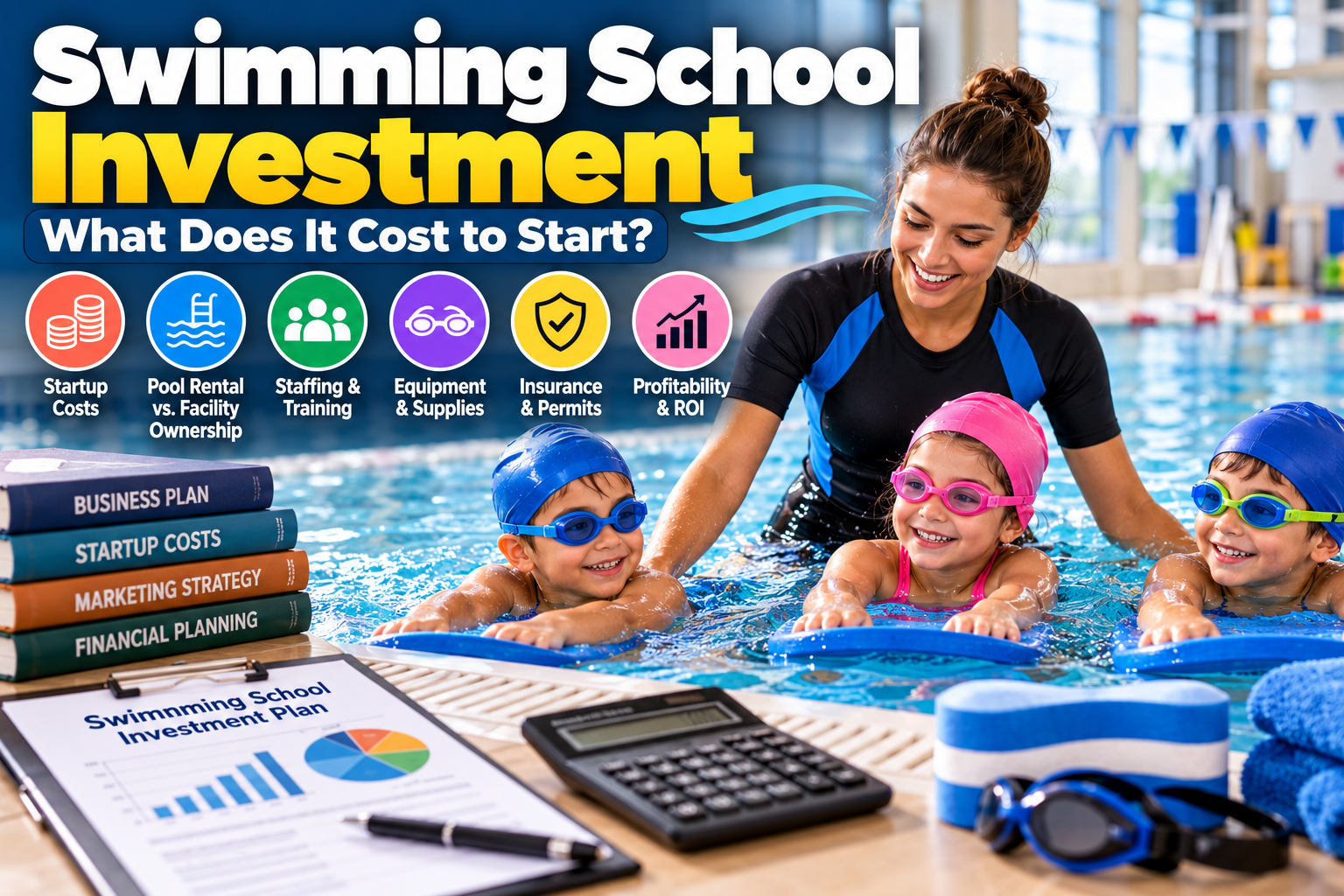
Swimming school investment depends on your business model, location, pool access, staffing needs, and target customers. Some entrepreneurs start by renting pool time at an existing aquatic center, while others lease or build a dedicated swimming facility. Each option requires a different level of capital and financial planning.
Before investing, you need to understand the startup costs, ongoing expenses, potential revenue, and safety requirements involved in running a swimming school. A realistic budget can help you avoid unexpected costs and determine whether the business fits your financial goals.
This guide explains the main swimming school investment costs, compares different business models, and shows you how to estimate revenue and break-even points before opening your business.
What Is a Swimming School Business?
A swimming school provides structured swimming lessons for people who want to learn basic water skills, improve their technique, or develop advanced swimming abilities.
Most swimming schools serve children and families. However, you can also offer adult beginner classes, private coaching, competitive swimming instruction, and specialized programs where qualified staff and suitable facilities are available.
A swimming school can operate in several ways:
- Pool rental model: Rent space or scheduled pool time from an existing facility.
- Partnership model: Work with a gym, hotel, school, or aquatic center that already has a swimming pool.
- Leased facility model: Lease a dedicated swimming facility and manage its operations.
- Owned facility model: Purchase or construct a pool and operate your own swimming school.
Your choice affects the amount of money you need upfront. For many first-time entrepreneurs, using an existing pool can be a practical way to test demand before committing to a major property investment.
How Much Investment Does a Swimming School Need?
There is no single startup cost for every swimming school. A business that rents pool time may need considerably less capital than one that constructs a new indoor facility.
Your location also matters. Property prices, labor costs, utilities, insurance, local regulations, and the availability of suitable pools can all affect your budget.
1. Starting With a Pool-Rental Model
Renting pool time can help you launch without purchasing property or paying for pool construction.
You arrange access to an existing pool and schedule classes around the facility’s availability. Depending on your agreement, you may pay by the hour, by the session, or through a longer-term contract.
Your initial expenses may include:
- Pool rental deposits and advance payments
- Instructor recruitment and training
- Swimming aids and teaching equipment
- Insurance and required permits
- A basic website and booking system
- Initial marketing expenses
- Working capital for early operating costs
This model can reduce your financial commitment. However, you must confirm that the rental agreement allows commercial swimming lessons and provides suitable access, safety arrangements, and scheduling flexibility.
2. Partnering With an Existing Facility
Another option is to partner with a gym, hotel, school, sports club, or aquatic center.
The facility provides pool access, while you manage instruction, enrollment, customer communication, and lesson scheduling. The exact responsibilities depend on your agreement.
You might pay a fixed rental fee, share revenue, or negotiate another arrangement.
Before signing, clarify who handles lifeguards, water quality, emergency equipment, cleaning, changing rooms, and liability responsibilities. A low rental price may not be attractive if you must cover additional costs that were not included in the original agreement.
3. Leasing a Dedicated Swimming Facility
Leasing a dedicated facility provides more control over scheduling, branding, and the customer experience.
However, the costs can increase substantially. You may need to pay a security deposit, make improvements, purchase equipment, hire staff, and cover utilities and maintenance.
Check the property’s condition before signing a lease. Pool filtration, heating, ventilation, drainage, accessibility, and safety systems can create significant expenses if they require upgrades.
Also, verify that the property can legally operate as a swimming school before committing to a long-term agreement.
4. Building or Buying Your Own Pool
Owning a swimming facility gives you greater control over operations and potentially allows you to generate revenue from multiple programs.
Nevertheless, this approach usually involves the greatest financial commitment. You may need to purchase land or property, obtain approvals, hire contractors, install pool systems, and arrange ongoing maintenance.
Indoor pools can require additional investment in heating, ventilation, humidity control, and energy efficiency. Outdoor facilities may have different construction and seasonal operating considerations.
Before pursuing this model, obtain location-specific construction estimates and assess whether projected demand can support the investment.
Main Swimming School Startup Costs
A useful budget separates one-time setup expenses from recurring operating costs. This distinction helps you estimate how much capital you need before opening and how much cash you will need afterward.
1. Pool Rental, Lease, or Construction
Pool access is often one of the most important cost drivers.
If you rent an existing pool, ask about hourly rates, minimum booking requirements, peak-time pricing, cancellation policies, and additional charges. If you lease a facility, include deposits, rent, repairs, and any required improvements.
For a new pool, request detailed estimates covering construction, equipment, permits, utilities, and ongoing maintenance.
Compare the total cost of each option rather than focusing only on the advertised rental or lease price.
2. Instructor Recruitment and Training
Qualified instructors are essential to a swimming school’s reputation and safety.
Your budget should account for wages, recruitment, training, background checks where required, and any relevant certifications. You may also need lifeguards or other qualified safety personnel, depending on the facility, class structure, and local requirements.
The number of instructors you need depends on enrollment, class size, lesson duration, and the age and abilities of your students.
Do not increase class sizes simply to reduce staffing costs. Maintain appropriate supervision and follow applicable safety standards.
3. Swimming and Safety Equipment
Most swimming schools need teaching aids and equipment suitable for their programs.
Common items include:
- Kickboards and suitable flotation aids
- Pool toys used for instruction
- Lane ropes and training equipment where needed
- First-aid supplies
- Rescue and emergency equipment
- Storage containers and cleaning supplies
- Staff uniforms or identification
Some facilities already provide essential safety equipment. Confirm what is included in your agreement before buying duplicate items.
4. Insurance and Permits
Insurance and regulatory costs vary by location and business structure.
Depending on your jurisdiction and operations, you may need general liability insurance, professional liability coverage, workers’ compensation insurance, business registration, and relevant permits.
Ask an insurance professional to explain what is covered and what exclusions apply. Also, confirm which licenses, instructor qualifications, pool inspections, and safety requirements apply to your business.
Do not assume that the pool owner’s insurance automatically covers your swimming school.
5. Website, Booking Software, and Marketing
Customers need an easy way to discover your school, understand your programs, and reserve lessons.
Your initial marketing budget may cover a website, domain name, booking software, local search visibility, introductory promotions, and printed materials.
Useful website features include class schedules, pricing, instructor profiles, contact details, safety information, and an online registration process.
You can also attract customers through local partnerships with schools, community organizations, and family-focused businesses. Start with a manageable marketing budget and track which channels generate paying students.
6. Initial Working Capital
Working capital helps cover expenses before enrollment reaches a sustainable level.
For example, you may need to pay pool rental fees and instructor wages before receiving enough lesson payments to cover them. You might also face seasonal changes, cancellations, or unexpected repairs.
Estimate several months of operating expenses based on your circumstances. The appropriate reserve depends on your fixed costs, payment terms, enrollment forecast, and access to additional funding.
Ongoing Operating Expenses
Startup costs are only part of the financial picture. You must also estimate the expenses required to operate the school each month.
| Expense | What to include |
|---|---|
| Pool access | Rent, lease payments, or facility costs |
| Staff | Instructor wages, lifeguards, payroll costs |
| Utilities | Heating, electricity, water, where applicable |
| Maintenance | Cleaning, equipment repairs, pool upkeep |
| Insurance | Premiums and required coverage |
| Marketing | Advertising, promotions, website expenses |
| Administration | Booking software, payment processing, accounting |
| Supplies | Teaching aids, first-aid items, replacement equipment |
Some expenses remain relatively stable even when enrollment falls. Others increase as you add classes, instructors, or students.
Identify these differences when preparing your budget. It will help you understand how much revenue you need to cover costs.
How Does a Swimming School Make Money?
A swimming school can generate revenue through several services. The best mix depends on your location, customer demand, available pool time, and instructor capacity.
Group Swimming Lessons
Group lessons allow instructors to teach several students during the same session.
They can provide a predictable source of revenue when classes are consistently filled. However, class sizes must remain appropriate for the students’ skill levels, ages, and safety requirements.
Private Swimming Lessons
Private lessons offer individual instruction and can command a higher price per session.
However, each lesson also uses instructor time and pool capacity. Compare the revenue per session with the cost of providing the service before deciding how much of your schedule to allocate to private coaching.
Monthly or Term-Based Packages
You can offer structured programs with weekly lessons over a set period. These packages may help you forecast enrollment and plan staffing.
Make payment schedules, cancellation terms, makeup lessons, and refunds clear to customers. Transparent policies can reduce disputes and improve trust.
Advanced Coaching and Other Programs
Depending on your qualifications and facilities, you may offer stroke improvement, adult beginner courses, or advanced coaching.
Additional programs can help you reach different customer groups. However, introduce them only when you have appropriate staff, sufficient demand, and suitable facilities.
How to Estimate Profitability and Break-Even
A swimming school can generate revenue without necessarily being profitable. Your financial forecast must account for the cost of delivering lessons and the fixed expenses of operating the business.
Start with three basic calculations:
Monthly revenue equals the total amount collected from lessons and other services.
Monthly profit before taxes and financing costs equals revenue minus operating expenses, subject to the specific costs included in your calculation.
Break-even enrollment is the number of paid enrollments or lesson units needed to cover your costs.
A Hypothetical Swimming School Example
Suppose you rent pool time and operate a small swimming school. You offer group lessons and charge $100 per student per month for a package of classes.
Assume the following figures:
| Item | Monthly amount |
|---|---|
| Paying students | 60 |
| Revenue per student | $100 |
| Total revenue | $6,000 |
| Pool rental | $1,500 |
| Instructor wages | $2,000 |
| Marketing and administration | $500 |
| Insurance, supplies, and other costs | $500 |
| Total operating expenses | $4,500 |
| Operating surplus before taxes and other excluded costs | $1,500 |
In this simplified example, the school generates $6,000 in monthly revenue and has a $1,500 operating surplus.
These numbers are illustrative only. They are not market averages or a prediction of actual results. Real costs may include additional expenses, and student payments depend on attendance, package terms, and collection rates.
Calculate Your Break-Even Enrollment
Using the same hypothetical figures, assume your monthly fixed costs are $3,000 and each student contributes $75 toward those costs after student-related variable expenses.
Your break-even enrollment would be:
Break-even enrollment = Fixed costs ÷ Contribution per student
$3,000 ÷ $75 = 40 students.
This means you would need 40 paying students to cover the modeled costs under those assumptions. You would need more students to generate a surplus.
The calculation changes if pool rental, staffing, prices, or other expenses change. For a more reliable forecast, build separate scenarios for low, expected, and high enrollment.
How to Reduce Initial Swimming School Investment
You do not necessarily need to build a large facility to test the business idea. A staged approach can help you learn about demand before committing more capital.
Start With Limited Pool Hours
Rent only the time slots you expect to use initially. Expand the schedule as enrollment grows and you have evidence that additional classes can cover their costs.
Validate Demand Before Committing
Speak with local families, schools, community groups, and potential adult students. Research existing swimming schools, their prices, class schedules, and customer reviews.
Before making a large financial commitment, validate your business idea before investing. Early research can help you identify unmet needs and test whether customers are willing to pay for your proposed programs.
Build Partnerships
Partnerships with established facilities may reduce the need for a large property investment.
Compare different agreements and calculate the total cost, including staffing, safety responsibilities, and access restrictions. Make sure the arrangement supports your business model rather than simply offering the lowest initial price.
Monitor Cash Flow Carefully
Track income and expenses every month. Pay attention to upcoming rental payments, payroll, customer refunds, and other obligations.
A practical cash reserve can help you manage fluctuations in enrollment. You can also use a structured process to manage business cash flow and identify potential shortfalls before they become serious problems.
Buy Equipment Based on Actual Needs
Purchase essential equipment first and expand your inventory as programs grow. Confirm what your pool partner already provides and compare prices from reliable suppliers.
Never reduce spending on essential safety equipment or qualified supervision just to lower startup costs.
Safety, Insurance, and Legal Requirements
Safety is central to a swimming school’s reputation and daily operations. A financially attractive business model will not be sustainable if it fails to protect students.
Before opening, establish clear procedures for supervision, emergency response, incident reporting, and communication with parents or guardians.
Check local requirements for instructor qualifications, lifeguard coverage, pool inspections, water quality, business permits, and safeguarding. Requirements can differ considerably by jurisdiction and facility type.
You should also review insurance coverage with a qualified professional. Confirm whether the policy covers your specific activities, the types of students you teach, and the facility where lessons take place.
If you teach children, pay particular attention to safeguarding policies, staff screening requirements, parental consent, and appropriate supervision.
Common Swimming School Investment Mistakes
Avoiding a few common mistakes can improve your financial planning and reduce unnecessary risk.
Underestimating Operating Costs
Pool rental and instructor wages may not be your only major expenses. Include insurance, maintenance, payment processing, marketing, supplies, and administrative costs in your forecast.
Assuming Every Class Will Be Full
Enrollment may take time to build. Forecast realistic class sizes and account for cancellations, seasonal demand, and periods when students are unavailable.
Investing in a Facility Too Early
Building or leasing a dedicated facility before testing demand can create substantial financial pressure. Consider whether renting pool time or partnering with an existing operator would help you validate the concept first.
Ignoring Safety Requirements
Insufficient staffing or inadequate safety arrangements can expose students and the business to serious risks. Plan for appropriate supervision and compliance from the beginning.
Failing to Maintain a Cash Reserve
Even a promising business may experience slower enrollment or unexpected expenses. Set aside working capital and review your forecast regularly.
Frequently Asked Questions
Q1: How Much Money Is Needed to Start a Swimming School?
Ans: The amount depends on whether you rent pool time, partner with an existing facility, lease a dedicated pool, or build your own. Prepare a location-specific budget covering setup costs, staffing, insurance, marketing, and working capital before deciding how much funding you need.
Q2: Is a Swimming School Profitable?
Ans: A swimming school can be profitable when enrollment, pricing, pool access, staffing, and operating costs are managed effectively. Profitability is not guaranteed, so estimate break-even enrollment and test different financial scenarios before investing.
Q3: Is Renting a Pool Cheaper Than Building One?
Ans: Renting an existing pool generally reduces the initial property and construction commitment. However, the long-term cost depends on rental rates, available hours, enrollment, and the terms of the agreement.
Q4: What Equipment Does a Swimming School Need?
Ans: Common items include teaching aids, kickboards, appropriate flotation aids, first-aid supplies, and emergency equipment. The exact list depends on the program and the facility’s existing equipment. Essential safety provisions should always be a priority.
Q5: How Can a Swimming School Attract Students?
Ans: You can attract students through a clear website, local search visibility, community partnerships, referrals, and introductory programs. Build trust by communicating instructor qualifications, lesson schedules, prices, safety procedures, and registration policies clearly.
Conclusion
Swimming school investment requires more than paying for pool access and hiring instructors. You also need a realistic operating budget, qualified staff, suitable insurance, safety procedures, and enough working capital to manage the early stages of the business.
For many new entrepreneurs, renting pool time or partnering with an existing facility can be a practical way to test demand before investing in a dedicated swimming center.
Start by researching your local market, comparing facility options, and estimating your break-even enrollment. With careful planning and a focus on student safety, you can make a more informed decision about whether a swimming school is the right business opportunity for you.