
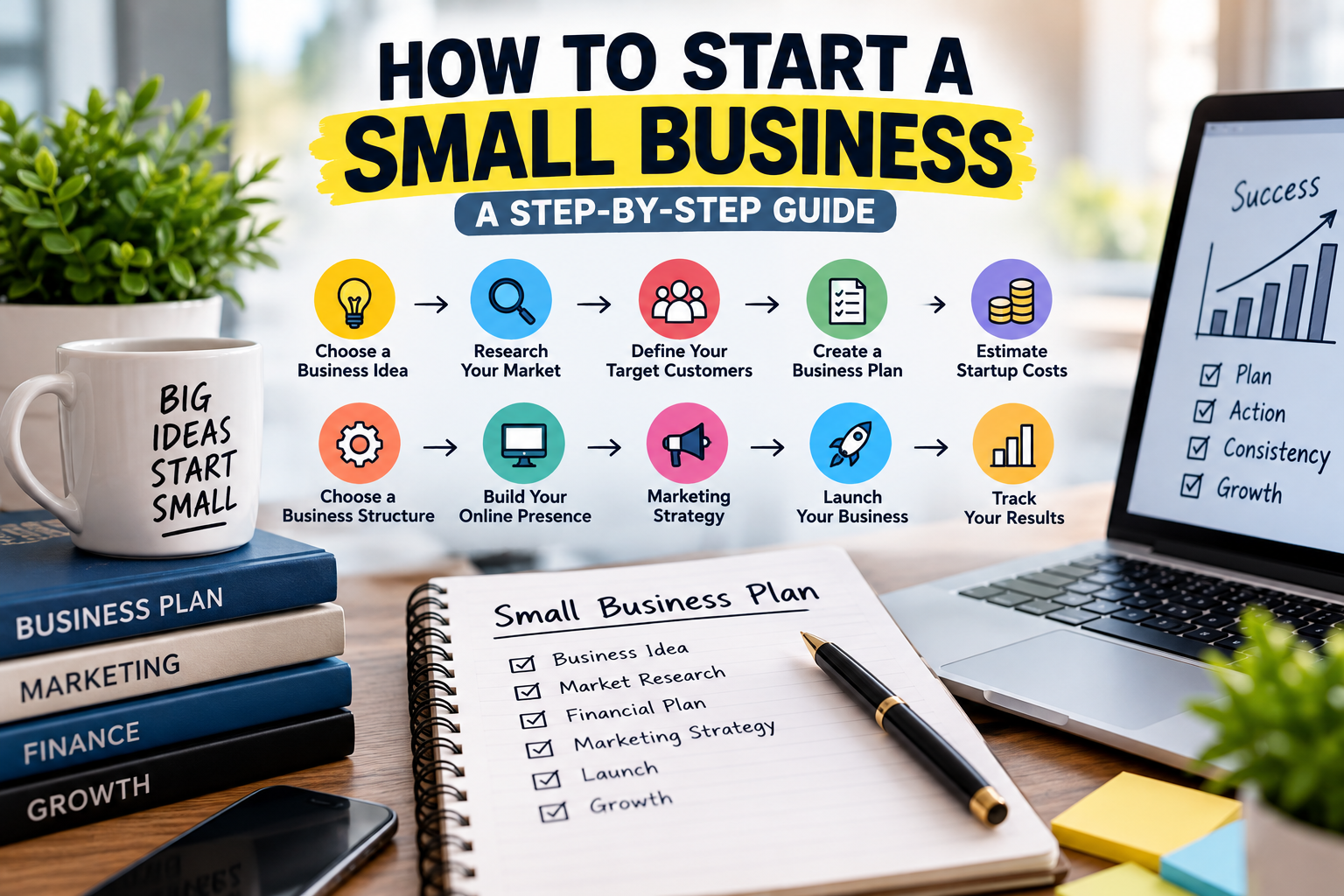
Starting a small business can be an exciting way to turn an idea, skill, or passion into a source of income. However, getting started involves more than choosing a business name and creating a website. You need to understand your customers, plan your finances, choose an appropriate business structure, and prepare for day-to-day operations.
If you are wondering how to start a small business, this guide walks you through the key steps from choosing an idea to launching and improving your business.
1. Choose a Business Idea
Start with an idea that solves a real problem or meets a clear customer need. Your business could be based on a product, service, professional skill, or specialized knowledge.
Before investing heavily, ask yourself:
- What problem does the business solve?
- Who would pay for the solution?
- What makes the idea useful or different?
- Can the business realistically generate revenue?
- What resources will you need to get started?
A simple business idea can be easier to test and improve than one that requires a large initial investment.
2. Research Your Market
Market research helps you understand your potential customers, competitors, and industry.
Study factors such as:
- Customer needs
- Market demand
- Competitor offerings
- Pricing
- Industry trends
- Customer buying behavior
Look for evidence rather than relying only on assumptions. Talking with potential customers, reviewing competitor websites, and studying existing market information can help you understand whether there is a genuine opportunity.
The U.S. Small Business Administration also recommends researching your industry, target market, and competitors when planning a business. Requirements and research methods may vary depending on your location and industry.
3. Define Your Target Customers
A common mistake among new business owners is trying to sell to everyone. Instead, identify the specific group most likely to need and pay for your product or service.
Consider:
- Age and location
- Occupation or business type
- Interests
- Problems they face
- Buying habits
- Budget
- Preferred communication channels
The clearer your target customer is, the easier it becomes to create products, pricing, marketing messages, and offers that match their needs.
4. Create a Business Plan
A business plan gives your idea a practical structure. It explains what your business will offer, who it will serve, how it will reach customers, and how it expects to make money.
Your plan can include:
- Business description
- Target market
- Competitor analysis
- Products or services
- Marketing strategy
- Sales strategy
- Financial projections
- Business goals
- Potential risks
You do not necessarily need a long document. A focused plan that answers the most important questions can be enough for a small business.
If you want a more detailed guide, see our article on how to write a business plan.
5. Estimate Your Startup Costs
Before launching, calculate how much money you need to get the business running.
Depending on your business, startup expenses may include:
- Equipment
- Inventory
- Website and software
- Business registration
- Licenses and permits
- Marketing
- Office or workspace costs
- Professional services
- Insurance
Also consider ongoing expenses such as rent, salaries, subscriptions, advertising, utilities, and supplies.
Separating one-time startup costs from recurring expenses can make your financial planning much clearer.
6. Choose a Business Structure
Your business structure can affect taxes, legal responsibilities, paperwork, and personal liability. Common structures include sole proprietorships, partnerships, limited liability companies, and corporations.
The right structure depends on factors such as your business type, location, ownership, and financial circumstances.
For businesses operating in the United States, the SBA explains that business structure affects taxation, fundraising, paperwork, and personal liability. Rules can differ by state, so business owners should check their local requirements and consider professional advice when appropriate.
If you operate outside the United States, use the relevant government authority in your country for information about available business structures and registration requirements.
7. Choose Your Business Name
Choose a name that is easy to remember and relevant to your brand.
Before using the name, check whether it is already being used by another business. You should also check relevant domain names and trademark databases if applicable.
A good business name should be:
- Easy to spell
- Easy to pronounce
- Relevant to your brand
- Suitable for future growth
- Available for legal use
Do not rush this step. Changing a business name later can create unnecessary branding and marketing work.
8. Register Your Business
Business registration requirements depend on your location, structure, and industry.
In the United States, the SBA notes that registration requirements can vary by business structure and location. Some businesses may also need tax identification numbers, licenses, or permits.
Before registering, check the official government requirements that apply to your business.
For U.S.-based businesses, the SBA’s launch guide covers business registration, tax IDs, licenses, permits, and other setup steps.
9. Set Up Your Business Finances
Keeping business finances organized from the beginning can make accounting and financial management easier.
Consider setting up:
- A separate business bank account where appropriate
- A bookkeeping system
- A method for tracking expenses
- A system for recording sales
- A budget
- A process for managing invoices and payments
Keep records of your income and expenses so you can understand how the business is performing.
Your tax and accounting responsibilities will depend on your country, business structure, and activities, so check the rules that apply to you.
10. Build Your Brand and Online Presence
A professional online presence can help potential customers understand what you offer and how to contact you.
Depending on your business, this may include:
- A website
- Business email
- Social media profiles
- Business listings
- Product pages
- Customer reviews
- Helpful educational content
Make sure your branding is consistent across your website and other platforms. Your business name, logo, messaging, and contact information should be easy to recognize.
11. Create a Marketing Strategy
Once your business is ready, you need a way to reach potential customers.
Choose marketing channels based on where your target audience spends time. Options may include:
- Search engine optimization
- Content marketing
- Social media
- Email marketing
- Paid advertising
- Partnerships
- Networking
- Referral marketing
Start with a manageable number of channels instead of trying everything at once. Track your results and focus more resources on activities that generate meaningful customer interest.
12. Launch and Test Your Business
You do not need to wait until everything is perfect before launching. If possible, start with a simple version of your product or service and collect feedback from real customers.
Pay attention to:
- Customer questions
- Sales
- Conversion rates
- Reviews
- Repeat purchases
- Common complaints
- Product or service requests
Real customer feedback can reveal problems and opportunities that are difficult to identify during the planning stage.
13. Track Your Results
After launching, measure the numbers that matter to your business.
Depending on your goals, you might track:
- Revenue
- Profit
- Customer acquisition cost
- Website traffic
- Conversion rate
- Customer retention
- Average order value
- Monthly expenses
Review these numbers regularly. If something is not working, investigate why and adjust your strategy.
Common Mistakes to Avoid
New business owners can face several common challenges. Avoiding preventable mistakes can make the early stages easier to manage.
Some mistakes include:
- Starting without researching customers
- Underestimating operating costs
- Trying to target everyone
- Ignoring competitors
- Spending too much before validating demand
- Mixing personal and business finances
- Neglecting record keeping
- Using too many marketing channels at once
- Failing to track results
A simple, measured approach can help you learn what works before committing more time and money.
Small Business Startup Checklist
Before launching, review this quick checklist:
- Choose and research your business idea
- Identify your target customers
- Research competitors
- Create a business plan
- Estimate startup and ongoing costs
- Choose a suitable business structure
- Select and check your business name
- Complete required registration
- Check licenses and permits
- Organize business finances
- Build your online presence
- Create a marketing strategy
- Launch and collect customer feedback
- Track your results
Frequently Asked Questions
Q1: How much money do I need to start a small business?
Ans: The amount varies widely by business type. Calculate your equipment, inventory, marketing, registration, and ongoing operating costs before deciding how much funding you need.
Q2: Can I start a small business with little money?
Ans: Yes. Some service-based and online businesses can be started with relatively low upfront costs. Your actual requirements will depend on the business model.
Q3: Do I need a business plan to start a small business?
Ans: A formal plan is not always required, but creating one can help you understand your customers, costs, competition, and business goals.
Q4: How do I find customers for a new business?
Ans: Start by identifying your target audience and choosing marketing channels they already use. Customer referrals, content marketing, social media, search engines, and partnerships can all be useful depending on the business.
Q5: What should I do before launching a small business?
Ans: Research your market, estimate costs, create a basic business plan, check legal requirements, organize your finances, and test your product or service with potential customers.
Final Thoughts
Learning how to start a small business is easier when you break the process into manageable steps. Start with a useful idea, research your market, understand your customers, plan your finances, and complete the legal requirements that apply to your location.
You do not need to build everything at once. Launch a practical version of your business, learn from customers, track your results, and improve your strategy as you grow.