
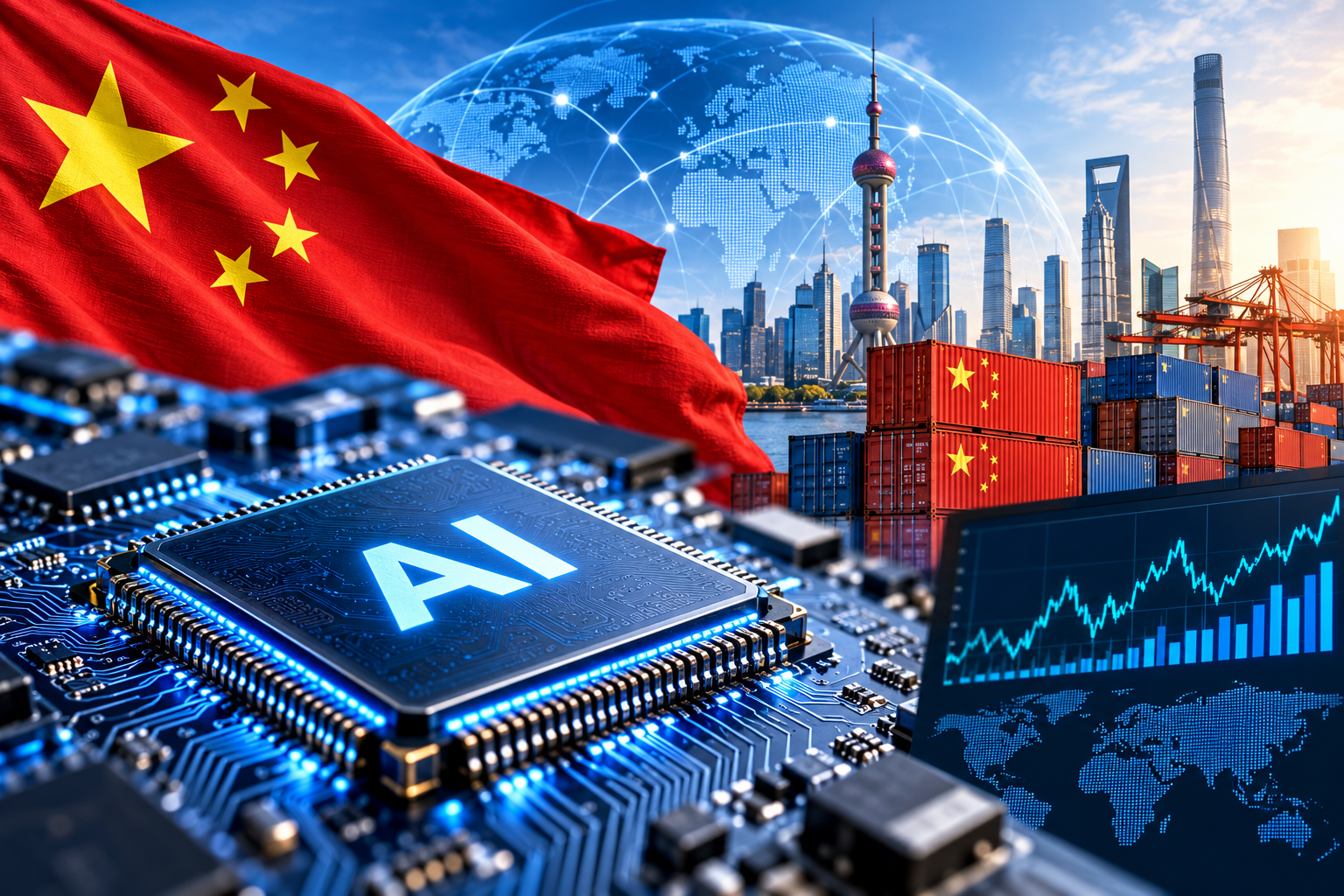
China is taking steps to strengthen its control over the international transfer of selected advanced technologies. The proposed changes cover artificial intelligence (AI), biotechnology, and solar energy, potentially affecting technology companies, manufacturers, investors, and international research partnerships.
On October 16, 2026, China’s Ministry of Commerce and Ministry of Science and Technology announced a draft revision to the country’s catalogue of technologies prohibited or restricted from export. The proposal covers 40 technologies across three sectors, including 23 AI-related technologies. Authorities also introduced interim registration requirements for certain technology exports while the proposed changes undergo review.
The announcement highlights a growing global debate about technology security, economic competition, and international cooperation. For businesses operating across borders, understanding these developments is essential for managing supply chains, partnerships, and regulatory risks.
What Is the Latest China AI News?
The main development is China’s proposal to expand export controls covering selected advanced technologies. The draft targets technologies that Chinese authorities consider strategically important or potentially sensitive from a national security perspective.
According to the official announcement, the proposed catalogue revision includes 40 technologies across artificial intelligence, biomedicine, and photovoltaic solar energy. Fourteen technologies are proposed for export prohibition, while another 26 would face restrictions.
The AI-related measures cover areas such as advanced AI models, intelligent agents, computing clusters, and technologies used to develop or operate sophisticated systems.
China says the proposed controls are intended to prevent misuse, protect sensitive technology, and support the safe development of artificial intelligence. Officials have also stated that the changes are not directed at any specific country or entity.
For the latest official explanation, readers can consult the Chinese Ministry of Commerce announcement.
It is important to distinguish the proposed permanent catalogue changes from the interim registration requirements. Businesses involved in potentially covered technology transfers should review the current requirements rather than assume that every proposed restriction is already a final prohibition.
What Technologies Could Be Affected?
The proposal covers several areas that support the development of advanced technology. However, it does not mean that every product or service connected to these industries will automatically be restricted.
Artificial Intelligence Models and AI Agents
AI models and intelligent agents are among the most significant areas covered by the proposed changes.
AI models process information and generate outputs, while AI agents can perform tasks through a series of actions. Depending on their capabilities, these systems may support research, software development, business operations, and other applications.
The proposed controls focus on selected underlying technologies and sensitive transfers rather than treating every AI application as prohibited.
This distinction matters because companies can distribute AI capabilities in different ways. Transferring model technology overseas may raise different regulatory questions from allowing customers to access a model through an online service.
Semiconductor and Computing Technologies
Advanced AI systems depend on computing infrastructure, chip design, and other specialized technologies.
China’s proposed catalogue revision includes AI-related computing technologies and areas connected with the development of advanced systems. Such controls could matter to companies involved in research, engineering, computing infrastructure, and cross-border technology licensing.
However, the announcement should not be interpreted as a blanket ban on all semiconductor exports from China. The scope depends on the specific technology, applicable thresholds, and relevant rules.
Businesses should identify the precise technologies involved in a transaction before drawing conclusions about its legality.
Biotechnology and Solar Energy
The proposal extends beyond artificial intelligence.
In biotechnology, it covers selected technologies associated with areas such as cell and gene therapies. In solar energy, it includes certain technologies used in photovoltaic manufacturing, including aspects of polysilicon and solar-cell production.
These sectors are important because technological expertise can be commercially valuable across international markets. New export controls may affect how companies license intellectual property, establish overseas operations, or collaborate with foreign partners.
Nevertheless, the proposed catalogue targets defined technologies. It should not be treated as a restriction on every biotechnology product or solar panel.
Why Is China Tightening Technology Export Controls?
China’s announcement comes during a period of intense competition over advanced technology. Governments increasingly view AI, semiconductor capabilities, and critical industrial technologies as matters involving both economic competitiveness and national security.
Several considerations help explain the policy.
National Security and Misuse Prevention
Advanced AI systems can support beneficial applications, including research, productivity, and software development. However, some capabilities could also be misused to develop malicious software, target sensitive systems, or undermine critical infrastructure.
Chinese authorities have cited the need to prevent misuse and maintain control over technologies that could create security risks.
Export controls provide governments with a mechanism to review certain transfers before sensitive capabilities reach overseas entities. The effectiveness of that approach depends on how the rules are defined and implemented.
Protecting Domestic Innovation
Advanced technology can represent years of research, investment, and specialized engineering. Governments may therefore seek to protect valuable intellectual property from transfers they consider strategically harmful.
For Chinese technology companies, export rules could influence decisions about licensing proprietary systems, sharing technical information, and establishing overseas operations.
At the same time, excessive restrictions could make international collaboration more complicated. Companies often depend on global customers, researchers, investors, and commercial partners to develop new products.
Responding to Global Technology Competition
China and the United States have introduced different measures affecting access to advanced technologies. US restrictions on certain advanced chips and related technology transfers to China have formed part of this wider competition.
China’s proposed controls add another dimension to the debate over which technologies can cross borders and under what conditions.
The broader challenge for both countries is balancing national security concerns with commercial growth, innovation, and international cooperation.
How Could China’s Export Restrictions Affect Global Businesses?
The practical effects will depend on the final scope of the rules, the technology involved, and how each company conducts its international operations.
Technology Companies May Need Additional Compliance Checks
Companies that develop AI models, license software, or transfer technical expertise overseas may need to examine their existing compliance procedures.
They should identify which technologies they use, where the underlying intellectual property is held, and whether a proposed transaction involves a transfer covered by Chinese regulations.
A company that licenses a proprietary model to a foreign partner may face different requirements from one that simply offers access through a hosted service.
Legal and compliance teams should therefore review the actual transaction instead of relying on broad descriptions of the new policy.
International Research Partnerships Could Become More Complex
Universities, laboratories, and private companies often collaborate across national borders. These partnerships may involve technical documents, software, model weights, research results, or intellectual property rights.
If a particular transfer falls within the controlled categories, organizations may need to establish additional review and registration procedures.
However, the proposal also recognizes certain forms of international cooperation and includes provisions intended to facilitate specified activities. The exact treatment depends on the technology and applicable conditions.
Supply Chains May Face Greater Uncertainty
Manufacturers and technology providers frequently depend on suppliers and partners in several countries. Changes to export rules can affect project schedules, licensing arrangements, and decisions about where research or production should take place.
Companies may respond by reviewing supplier relationships, documenting the origin of critical technologies, and developing alternative arrangements where appropriate.
Still, the announcement does not mean that all international supply chains will be disrupted. The impact will be greatest for businesses whose activities involve specifically covered technologies.
Investors May Need to Reassess Regulatory Risks
Investors following AI, semiconductors, biotechnology, and renewable energy should consider how technology controls may affect individual businesses.
For example, a company that relies heavily on overseas licensing may face different risks from one that primarily sells finished products. Likewise, a business with diverse markets may be less exposed to a single regulatory change than one that depends on a narrow set of international transactions.
The announcement alone does not establish whether a particular stock will rise or fall. Investors should evaluate company disclosures, financial performance, competition, and the details of any applicable restrictions.
What Does the Proposal Mean for AI Services and Open-Source Technology?
One important question is whether China’s proposed rules would prevent international users from accessing Chinese AI systems.
The answer depends on how the technology is transferred and which provisions apply.
According to China’s official explanation, the proposed controls distinguish certain overseas transfers of restricted AI technology from other ways of providing AI services. Access through application programming interfaces (APIs), websites, apps, and software-as-a-service platforms is generally treated differently from transferring covered technology for overseas deployment.
The proposal also provides for facilitated procedures in specified circumstances, including certain open-source technology exports and overseas computing operations.
Technologies already available in the public domain through open-source releases or academic publications are generally intended to remain outside the proposed controls, subject to the applicable provisions.
These distinctions are important for developers and businesses. Using an online AI tool is not necessarily equivalent to acquiring its underlying model weights, source code, or technical architecture.
Companies should examine the relevant rules before assuming that a particular service is either unrestricted or prohibited.
What Should Businesses and Investors Watch Next?
The next steps in the policy process will help determine its practical impact.
Monitor the Consultation and Final Rules
China announced that public consultation on the proposed catalogue revision would run until November 15, 2026. The final provisions and their implementation will determine the longer-term obligations for affected companies.
Businesses should monitor official announcements for changes to definitions, exemptions, licensing procedures, and registration requirements.
Review Existing Technology Transfers
Organizations should identify ongoing and planned transfers that might involve covered technologies. Relevant activities can include transferring intellectual property ownership, licensing technology for overseas use, and changing ownership or control to a foreign entity.
The interim registration requirements are particularly important for potentially covered transactions. Companies should seek qualified legal advice when the scope of a requirement is unclear.
Evaluate Exposure by Industry
Businesses should assess their exposure based on actual operations rather than assuming that an entire industry will be affected equally.
AI developers may need to review model transfers and deployment arrangements. Semiconductor businesses may need to assess relevant design and computing technologies. Solar manufacturers and biotechnology firms should examine the specific processes and technologies covered by the catalogue.
A documented risk assessment can help companies identify which activities require further review.
Avoid Reacting to Headlines Alone
Policy announcements can create uncertainty, but headlines do not always capture the full scope of a regulation.
Investors and business leaders should compare official documents with reliable reporting, examine the precise provisions, and distinguish proposed changes from final requirements.
That approach can reduce the risk of making expensive decisions based on incomplete information.
FAQs
Q1: What Is the Latest China AI News?
Ans: On October 16, 2026, China proposed revising its export-control catalogue to cover 40 technologies across AI, biotechnology, and solar energy, including 23 AI-related technologies.
Q2: Why Is China Restricting Technology Exports?
Ans: Chinese authorities cite national security, preventing misuse, and maintaining control over sensitive technologies. The proposal also comes amid wider international competition in advanced technology.
Q3: Which AI Technologies Could Be Affected?
Ans: The proposed controls include selected advanced AI models, intelligent agents, computing clusters, and related technologies. The precise scope depends on the applicable rules and technical definitions.
Q4: How Could China’s Technology Restrictions Affect Global Businesses?
Ans: Potential effects include additional compliance checks, changes to licensing arrangements, and greater uncertainty for certain international research and technology transfers. The impact will vary by company and transaction.
Q5: Are China’s Proposed Restrictions Already in Effect?
Ans: The proposed catalogue changes were still undergoing consultation as of the October 16 announcement. Interim registration requirements were introduced for certain covered technology exports while the permanent changes are being reviewed.
Q6: Will China’s Rules Ban All Chinese AI Services Overseas?
Ans: No blanket ban on all Chinese AI services was announced. The proposal distinguishes certain technology transfers from access through APIs, apps, websites, and hosted services, subject to the applicable rules.
Conclusion
China’s proposed technology export controls represent an important development for the global AI and advanced manufacturing industries. The plan covers selected technologies in artificial intelligence, biotechnology, and solar energy, while introducing interim registration requirements for certain transfers.
For international businesses, the key issue is not simply whether they operate in an affected industry. It is whether their specific technologies, intellectual property arrangements, or overseas activities fall within the applicable requirements.
Companies and investors should monitor official updates, review relevant transactions, and avoid treating proposed measures as blanket restrictions. As the rules develop, their precise scope and implementation will determine how significantly they affect global technology trade.