
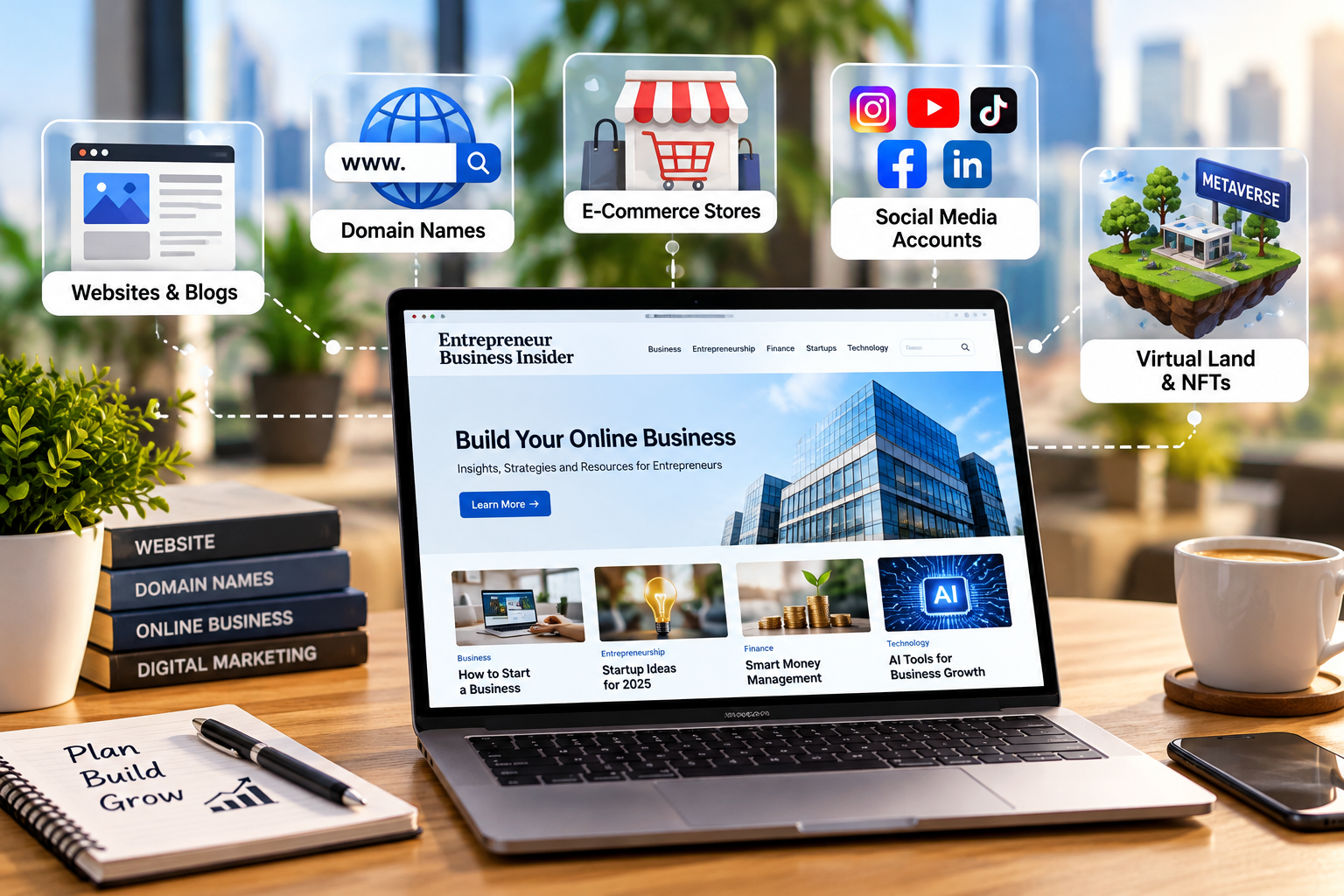
Digital real estate is becoming an interesting opportunity for entrepreneurs who want to build assets online. Instead of buying a physical building or plot of land, you can create or purchase digital assets such as websites, domain names, and online stores. These assets can attract visitors, generate revenue, and potentially increase in value over time.
However, digital real estate is not a guaranteed way to make money. Success depends on the asset you choose, the demand for it, your business strategy, and how well you manage its risks.
In this guide, you will learn what digital real estate means, explore its main types, understand how it can generate income, and discover practical steps to get started.
What Is Digital Real Estate?
Digital real estate refers to online assets that have commercial or financial value. These assets can include websites, blogs, domain names, e-commerce stores, and virtual land inside online environments.
Think of a domain name as an address and a website as the building developed on that address. A useful website can attract visitors, provide information, sell products, or connect customers with businesses.
For example, an entrepreneur might build a website about personal finance. Over time, the site could attract readers through search engines and earn money through advertising, affiliate partnerships, or sponsored content.
The value of digital real estate depends on the asset itself. A website with useful content and consistent revenue may be worth more than a newly created website without visitors. Similarly, a memorable domain name may attract buyers, although resale is never guaranteed.
Unlike physical property, digital assets depend heavily on technology, online demand, and third-party platforms. Therefore, their ownership rights, operating costs, and risks can differ significantly.
Types of Digital Real Estate
There are several types of digital real estate. Each offers different opportunities, costs, and levels of risk.
1. Websites and Blogs
Websites and blogs are among the most practical forms of digital real estate for entrepreneurs. You can create a website around a specific subject, publish useful content, and build an audience over time.
For example, a website covering entrepreneurship could publish guides about business planning, marketing, productivity, and startup management.
Once the website attracts relevant visitors, several monetization options may become available:
- Display advertising: Earn revenue when advertisements appear on your website.
- Affiliate marketing: Receive commissions when readers purchase products through your referral links.
- Sponsored content: Work with brands that want to reach your audience.
- Lead generation: Connect potential customers with businesses offering relevant services.
- Digital products: Sell ebooks, templates, courses, or other downloadable resources.
Building a successful website takes time. You need useful content, a clear audience, technical maintenance, and a strategy for attracting visitors.
2. Domain Names
A domain name is the web address people use to access a website. Examples include business.com and other memorable brand names.
Some entrepreneurs register available domains or purchase existing ones because they believe those names may appeal to future buyers.
A domain’s potential value can depend on its length, memorability, commercial relevance, brand suitability, and market demand. However, a short name is not automatically valuable, and owning a domain does not guarantee that someone will want to buy it.
Domain investors also need to account for renewal fees and possible trademark conflicts. Before registering a name, check its availability and investigate whether it could infringe on an existing brand.
For information about domain registration and the organizations responsible for coordinating the domain name system, visit ICANN’s official website.
3. E-Commerce Stores
An e-commerce store allows you to sell physical products, digital products, or services online.
For example, you might create a store selling office accessories, business templates, educational resources, or products for a particular hobby.
A well-managed store can develop value through its brand, customer relationships, product range, repeat purchases, and reliable operations.
Nevertheless, running an online store involves more than building a website. You may need to manage inventory, payments, shipping, customer service, returns, and marketing. Digital products avoid some physical fulfillment costs but still require product development and customer support.
4. Social Media Accounts and Online Audiences
An established online audience can have commercial value. Businesses with engaged followers may attract sponsorships, partnership opportunities, or customers for their products and services.
For instance, a creator who publishes practical small-business advice might develop an audience that is relevant to software companies or business service providers.
However, a social media account is different from a domain name or an independently controlled website. The platform sets the rules and may restrict accounts, change its algorithms, or limit monetization.
Account transfers and sales may also violate platform policies. Always review the relevant terms before treating a social account as an asset to buy or sell.
5. Virtual Land and Metaverse Assets
Virtual land refers to digital spaces within certain online environments, including metaverse platforms and blockchain-based worlds.
Depending on the platform, people may purchase virtual parcels to develop experiences, host events, display digital items, or participate in virtual communities.
Some virtual land is represented by non-fungible tokens, commonly called NFTs. However, owning a token does not automatically provide the same rights as owning physical land. The rights you receive depend on the platform, the associated terms, and the underlying technology.
Virtual land is particularly speculative because its value can depend on platform popularity, user activity, and buyer demand. Prices can fall sharply, and a digital environment may lose relevance or cease operating.
Beginners should understand these risks before spending money on virtual assets.
How Does Digital Real Estate Make Money?
Digital real estate can generate revenue in several ways, depending on the asset and its audience.
Advertising revenue: A website can display advertisements and earn income based on eligible views or clicks. Actual earnings depend on factors such as traffic quality, audience location, subject matter, and advertising arrangements.
Affiliate commissions: Website owners can recommend relevant products and receive commissions from qualifying purchases. Successful affiliate marketing requires useful recommendations and an audience that trusts the content.
Product and service sales: An online store or business website can sell products, consulting, subscriptions, or professional services directly to customers.
Sponsored partnerships: Companies may pay to reach an audience through sponsored articles, newsletters, videos, or other agreed promotional content. Sponsorships should be disclosed where required.
Asset resale: An owner may sell a website or domain to another buyer. The potential selling price depends on demand, performance, quality, and the terms of the transaction.
Not every digital asset produces income. A domain may remain unsold, a website may receive little traffic, and a virtual parcel may have no interested buyers. Treat projected earnings as estimates rather than promises.
How to Get Started With Digital Real Estate
If you are new to digital real estate, start with a manageable project rather than purchasing an expensive asset immediately.
Step 1: Choose Your Digital Asset
First, decide what you want to build or acquire. A content website, an e-commerce store, a domain name, and virtual land require different skills.
If you enjoy writing, researching, and publishing, a niche website may be a sensible starting point. If you understand products and customer service, an online store might suit you better.
Choose an asset that matches your interests, budget, and available time.
Step 2: Research Your Market
Next, identify the audience you want to serve. Research its questions, problems, purchasing habits, and existing competitors.
For a content website, keyword research can help you discover subjects people search for online. Review competing websites to understand what information they provide and where you can offer something more useful.
For an online store, investigate customer demand, competitors, pricing, and product availability.
Market research reduces guesswork, but it cannot guarantee success.
Step 3: Set a Realistic Budget
Decide how much you can afford to invest without relying on immediate returns.
Your budget may need to cover domain registration, hosting, website design, content creation, software, marketing, and ongoing maintenance. Buying an established website may also require a substantial upfront payment.
Keep some funds available for unexpected expenses. Avoid borrowing money or spending essential living expenses on an unproven digital asset.
Step 4: Build or Buy Your Asset
You can create a digital asset from scratch or purchase an existing one.
Building a website gives you greater control over its design, content, and direction. However, you must invest time in developing it and attracting visitors.
Buying an established website may provide existing traffic or revenue, but it requires careful investigation. Review traffic analytics, revenue records, operating costs, backlinks, content quality, and ownership details before making a purchase.
Use a secure transaction process and confirm that the seller has the right to transfer the asset.
Step 5: Develop Traffic and Revenue
After launching your asset, focus on providing real value to your audience.
For a website, publish helpful content, improve user experience, strengthen relevant internal links, and use search engine optimization responsibly. For an online store, focus on product quality, clear descriptions, reliable service, and customer trust.
Choose monetization methods that suit your audience. Adding too many advertisements or irrelevant promotions can reduce user experience and damage credibility.
Step 6: Monitor and Improve Performance
Track meaningful indicators such as website traffic, conversion rates, operating expenses, customer retention, and revenue.
Use the results to identify what works and what needs improvement. Update outdated content, fix technical problems, and adjust your strategy when customer needs change.
Digital assets require ongoing work. Regular maintenance and informed decisions can help protect their usefulness and commercial potential.
How to Evaluate Digital Real Estate Before Buying
Before purchasing an existing digital asset, review its performance and potential weaknesses.
- Traffic quality: Check where visitors come from and whether the audience is relevant.
- Revenue verification: Request reliable records and compare income with expenses.
- Search performance: Review organic traffic trends, content quality, and backlink history.
- Ownership: Confirm domain registration, website access, intellectual property rights, and transfer requirements.
- Competition: Assess whether the asset can remain useful in a competitive market.
- Security: Check for malware, compromised accounts, and other technical concerns.
- Exit options: Consider whether a realistic market exists for reselling the asset.
Do not rely solely on screenshots, seller claims, or projected earnings. Verify important information independently and seek professional advice when the transaction is complex.
Benefits of Digital Real Estate
Digital real estate offers several potential advantages.
Flexible entry options: Some assets, such as basic websites and domain names, can be started with relatively modest budgets.
Global reach: An online business can serve customers in different locations without requiring a physical storefront.
Scalability: A successful website or digital product can sometimes reach more customers without increasing costs at the same rate as sales.
Multiple revenue streams: Depending on the business, owners may combine advertising, product sales, subscriptions, and partnerships.
Business ownership experience: Developing a digital asset can help entrepreneurs learn content marketing, analytics, customer acquisition, and online operations.
These advantages depend on execution. Low startup costs do not mean that an asset will be profitable or easy to maintain.
Risks and Challenges to Understand
Digital real estate also has meaningful risks.
- Uncertain income: Visitors may not convert into customers, and advertising or affiliate earnings can fluctuate.
- Platform dependence: Search engines, social networks, and marketplaces can change their rules or distribution systems.
- Cybersecurity: Hacking, phishing, and account theft can threaten access to digital assets.
- Competition: Other businesses may offer better products, stronger content, or lower prices.
- Resale uncertainty: Finding a buyer at the expected price can take time or prove impossible.
- Speculative markets: Virtual land and some blockchain-based assets can experience substantial price swings.
Protect important accounts with strong passwords and multifactor authentication. Keep backups, renew domains on time, and maintain records of ownership and transactions.
For investment-related decisions, use independent research and consult trustworthy educational resources such as Investor.gov. Never assume that a digital asset will appreciate simply because its price has risen in the past.
Digital Real Estate vs. Traditional Real Estate
| Factor | Digital real estate | Traditional real estate |
|---|---|---|
| Asset examples | Websites, domains, online stores | Homes, offices, commercial land |
| Starting costs | Can be relatively low, depending on the asset | Often requires substantial capital |
| Maintenance | Content, software, hosting, security | Repairs, upkeep, insurance, and other costs |
| Income sources | Ads, commissions, sales, subscriptions | Rent, leases, or resale |
| Main risks | Traffic loss, platform changes, cyberattacks | Vacancy, property damage, market changes |
| Ownership | Depends on the asset and applicable terms | Depends on title, contracts, and local law |
Neither category is automatically safer or more profitable. The right choice depends on your financial situation, expertise, objectives, and willingness to manage risk.
Is Digital Real Estate Worth It for Beginners?
Digital real estate may be worth exploring if you are prepared to learn, work consistently, and evaluate opportunities carefully.
For many beginners, building a useful website or developing a small online business offers a practical way to understand the market without immediately purchasing an expensive asset.
Start with one clear goal, validate demand, and monitor your costs. Avoid offers that promise guaranteed passive income or unusually high returns with little effort.
You can also explore our business resources for broader entrepreneurship topics while developing your plan.
Frequently Asked Questions
1. What is digital real estate?
Ans: Digital real estate refers to online assets with potential commercial or financial value, such as websites, domains, and virtual land.
2. What are examples of digital real estate?
Ans: Common examples include blogs, domain names, e-commerce stores, and virtual properties in online environments.
3. Can beginners invest in digital real estate?
Ans: Yes. Beginners can start by building a small website or online store and learning how to attract an audience.
4. How does digital real estate make money?
Ans: It may generate income through advertising, affiliate commissions, product sales, sponsored content, or asset resale.
5. Is digital real estate a legitimate investment?
Ans: Some digital assets are legitimate business assets, but their value and income are uncertain. Research each opportunity carefully.
6. Do you need a lot of money to get started?
Ans: Not always. Some websites and domains have relatively low entry costs, while established businesses can be expensive.
7. Is digital real estate passive income?
Ans: Usually not at the beginning. Most digital assets require maintenance, marketing, updates, and ongoing management.
8. What are the risks of digital real estate?
Ans: Key risks include changing platform rules, lost traffic, cybersecurity threats, uncertain income, and difficulty reselling an asset.
Conclusion
Digital real estate gives entrepreneurs different ways to build and manage valuable online assets. Websites, domain names, e-commerce stores, and virtual land all offer different opportunities, but they also come with different responsibilities and risks.
The most sensible approach is to choose an asset that matches your skills, research its market, and invest within your budget. Focus on building genuine value rather than chasing quick profits.
With careful planning, ongoing improvement, and realistic expectations, digital real estate can become part of a broader online business strategy.