
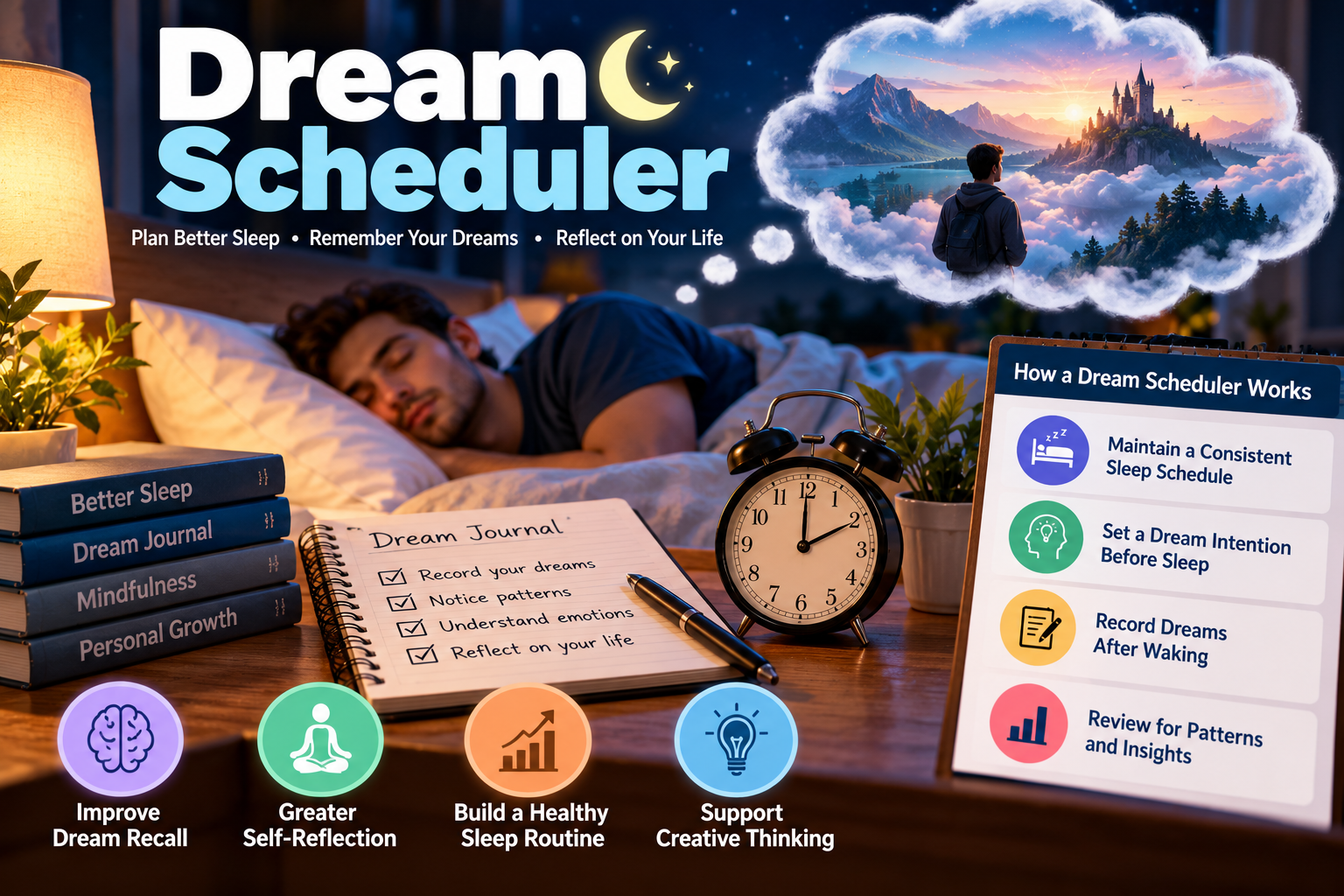
A dream scheduler is a practical approach to organizing your bedtime habits, dream intentions, and morning reflections. Rather than treating dreams as random events you cannot explore, this method gives you a consistent way to record what you remember and notice recurring themes.
The term does not refer to one universally recognized scientific device or a single standardized method. Instead, it can describe a personal system for improving dream recall through sleep routines, journaling, and intentional reflection.
In this guide, you will learn what a dream scheduler is, how it works, how to create a schedule that fits your lifestyle, and which mistakes to avoid. You will also discover how to use dream journaling without sacrificing healthy sleep.
What Is a Dream Scheduler?
A dream scheduler is a personal routine designed to help you prepare for sleep, remember dreams after waking, and organize your observations. It may include a regular bedtime, a short reflection before sleep, a dream journal, and a few minutes of quiet time in the morning.
Think of it as a schedule for observing your dreams rather than controlling them. You cannot guarantee what you will dream about, but you can create habits that make it easier to remember and document your experiences.
For example, someone might go to bed at 10:30 p.m., spend two minutes setting an intention to remember their dreams, and write down any remembered details immediately after waking at 6:30 a.m.
Another person might use a voice recorder instead of writing. Both approaches can work as personal journaling methods, provided they do not interfere with adequate sleep.
Is a Dream Scheduler an App or a Device?
Not necessarily. The phrase may appear in articles, online discussions, or products that use similar terminology. Its meaning depends on the context in which it appears.
A dream scheduler can simply be a paper notebook and a consistent routine. You do not need a special device, a paid subscription, or an advanced sleep-tracking system to begin.
If a specific app or website uses this name, check its features and claims separately. A tool that records sleep patterns is not automatically capable of identifying the meaning of dreams or predicting what you will dream about.
How Does a Dream Scheduler Work?
A dream scheduler combines several simple habits that support dream recall and reflection. Its main purpose is to make the process consistent enough that you can identify patterns in your own experiences.
1. Establish a Consistent Sleep Schedule
Start by choosing a realistic bedtime and wake-up time. Try to keep them reasonably consistent throughout the week while allowing enough time for sleep.
A regular schedule helps support your body’s internal clock. Most adults generally need seven to nine hours of sleep each night, although individual needs can vary.
You can learn more about sleep timing and healthy routines from the National Sleep Foundation.
2. Set an Intention Before Bed
Before falling asleep, take a moment to remind yourself that you want to remember any dreams you have. Keep the intention simple and avoid turning it into a demanding task.
For example, you might think, “When I wake up, I will take a moment to remember anything I dreamed.”
This practice does not guarantee dream recall. However, it gives you a clear reminder to pause and reflect before beginning your morning activities.
3. Keep a Dream Journal Nearby
Place a notebook, pen, phone, or voice recorder beside your bed. The goal is to capture details quickly, before everyday thoughts push the dream from your memory.
You do not need to write a polished story. A few words about a location, person, emotion, or event can be enough to start.
4. Review Your Notes Over Time
After collecting entries for several days or weeks, review them for recurring details. You may notice familiar places, similar emotions, or themes that appear during particular periods of your life.
These observations can encourage personal reflection. However, repeated dream themes do not automatically prove that a particular event will happen or that a symbol has one fixed meaning.
Benefits of Using a Dream Scheduler
A dream scheduler is a low-cost personal practice. Its potential benefits depend on your goals and how consistently you use it.
Improved Dream Recall
Dream memories can fade quickly after waking. Recording them as soon as possible gives you a better chance of preserving the details you remember.
A journal also provides a record that you can review later instead of relying entirely on memory.
Greater Self-Reflection
Writing about dreams can help you explore the emotions and experiences that stand out to you. For instance, you might notice that a particular work concern appears in your thoughts during a stressful period.
This does not mean the dream provides a definitive explanation of your feelings. Instead, the entry can serve as a starting point for asking yourself useful questions about your current experiences.
A More Consistent Bedtime Routine
Planning a short evening routine can encourage you to slow down before bed. Reading, writing a few notes, or listening to calming audio may help you transition away from daily activities.
The key is to choose relaxing habits that fit your needs rather than following a complicated routine that makes bedtime feel like work.
A Record of Recurring Themes
Over time, your entries may reveal patterns in settings, characters, activities, or emotions. Looking at these details together can be more useful than trying to interpret one dream in isolation.
For example, you might notice that dreams involving deadlines occur during a busy work period. That observation may prompt you to consider whether you need more rest or a better plan for managing your responsibilities.
Support for Creative Reflection
Some people use dream journals to explore ideas for writing, art, or personal projects. A dream may contain an unusual scene or combination of ideas that inspires a creative experiment.
You do not need to believe that every dream has a hidden message to benefit from recording interesting details.
How to Create Your Own Dream Scheduler
You can build a useful dream scheduler without buying anything. Begin with a few habits that are easy to repeat, then adjust the routine according to your sleep needs and schedule.
Step 1: Choose Your Sleep and Wake Times
Select a bedtime and wake-up time that allow you to get enough sleep. Consider your work, study, family responsibilities, and natural preferences.
For example, if you need to wake up at 6:30 a.m. and aim for eight hours of sleep, you could plan to be asleep around 10:30 p.m. You may need to go to bed earlier to allow time to fall asleep.
Avoid sacrificing sleep just to record more dreams. Your overall rest is more important than collecting additional journal entries.
Step 2: Create a Short Wind-Down Routine
Spend the final 10 to 20 minutes before bed doing something calming. You might read a book, prepare for the following day, write down unfinished tasks, or practice slow breathing.
If bright screens or stimulating content keep you alert, reduce their use before bedtime. Your routine should make it easier to relax, not give you another demanding task to complete.
Step 3: Set a Simple Dream Intention
Before closing your eyes, briefly remind yourself that you want to remember any dreams you experience.
You can also choose a general reflection topic, such as a recent experience or a creative question. Keep expectations flexible, because you cannot decide exactly what your brain will produce during sleep.
Step 4: Record Dreams Immediately After Waking
When you wake up, remain still for a few moments if it feels comfortable. Try to recall any images, conversations, places, or emotions that remain in your mind.
Write down what you remember before checking messages or starting your normal morning routine.
If you remember nothing, do not force yourself to invent details. Simply record “No dream recalled” and continue with your day.
Step 5: Use a Consistent Entry Format
A simple template makes your notes easier to review. You can use the following structure for every entry:
- Date: When you woke up.
- Sleep schedule: Approximate bedtime and wake-up time.
- Dream details: People, places, actions, or images you remember.
- Emotions: How you felt during the dream and after waking.
- Possible connections: Recent events or thoughts that come to mind.
- Sleep quality: Whether you feel rested or unusually tired.
You can leave any section blank when you do not have enough information. The purpose is to record your experience honestly, not to complete every field.
Step 6: Review Your Entries Weekly
Choose a convenient time once a week to read your recent entries. Look for repeated themes, emotional patterns, or changes in how often you remember dreams.
Ask yourself questions such as:
- Which details appeared more than once?
- Did any dream remind me of a recent experience?
- Did I notice a connection between my sleep habits and dream recall?
- Did journaling feel useful, neutral, or stressful?
Treat your observations as personal reflections rather than scientific conclusions. A small number of entries cannot establish that one habit caused a particular dream.
Example of a Simple Dream Scheduler
The following example shows how a beginner might organize a routine. Adjust the times to fit your own responsibilities and sleep needs.
| Time | Activity | Purpose |
|---|---|---|
| 9:45 p.m. | Begin winding down | Transition away from daily tasks |
| 10:00 p.m. | Read or relax quietly | Prepare for sleep |
| 10:15 p.m. | Set a dream intention | Remind yourself to recall dreams |
| 10:30 p.m. | Go to sleep | Maintain a consistent routine |
| 6:30 a.m. | Wake up | Begin the morning calmly |
| 6:32 a.m. | Recall and record dreams | Preserve remembered details |
| Sunday morning | Review weekly entries | Notice recurring themes |
These times are illustrative, not a scientifically established schedule for dreaming. Your routine should prioritize sufficient sleep and a realistic wake-up time.
Best Tools for a Dream Scheduler
You can choose a tool based on how you prefer to record information. A complicated system is not necessary.
Paper Notebook
A notebook is simple, inexpensive, and available without opening an app. You can write freely, draw scenes, or create your own entry template.
It is especially useful if you prefer to keep your bedtime routine away from screens.
Notes App or Digital Document
A notes app allows you to search old entries and organize them by date or topic. You can also create a reusable template so that each entry follows the same structure.
Consider protecting your notes with a device passcode or other privacy settings if they contain personal information.
Voice Recorder
If writing feels difficult immediately after waking, record a short voice note. Describe the main events and emotions you remember, then transcribe or organize the recording later if you wish.
Keep the recording process brief so that it does not become disruptive.
Sleep Diary
A sleep diary focuses on your sleep habits rather than dream content alone. It may include bedtime, wake-up time, nighttime awakenings, caffeine use, naps, and how rested you feel.
This information can help you identify sleep patterns. For more guidance, read the Sleep Foundation’s sleep diary guide.
Remember that consumer sleep trackers estimate certain sleep measures; they do not provide a complete or definitive account of your dreams.
Common Dream Scheduler Mistakes to Avoid
A dream scheduler should make reflection easier, not create pressure around sleep.
Trying to Control Every Dream
You cannot reliably schedule a specific dream for a particular night. Setting an intention may help you remember dreams, but it does not guarantee a specific result.
Keep your goal focused on observation rather than control.
Reducing Sleep to Collect More Dreams
Avoid setting alarms throughout the night solely to capture dreams unless a qualified healthcare professional has advised you to follow a specific plan.
Repeated interruptions may reduce sleep quality and leave you tired during the day. A healthy routine should protect your rest.
Expecting Instant Results
Some people remember dreams frequently, while others recall very little. Your recall may also vary from one night to another.
Give the habit time, but do not treat a lack of remembered dreams as a failure.
Overinterpreting Dream Symbols
Online dream dictionaries often assign fixed meanings to objects, people, and situations. These interpretations are not universal scientific rules.
Instead, consider what a detail means to you personally and whether it reminds you of a real experience. Keep your conclusions open to other explanations.
Making the Routine Too Complicated
You do not need multiple apps, detailed scoring systems, or long nightly exercises. A regular sleep schedule and a short morning note may be enough.
Start small and add features only when they genuinely help.
Is a Dream Scheduler Scientifically Proven?
The answer depends on what you mean by “dream scheduler.”
A personal schedule is a practical way to organize bedtime habits and dream journaling. Dream journals are commonly recommended as a way to support dream recall, and regular sleep timing is supported by sleep research.
However, there is no guarantee that a particular routine will increase dream recall for everyone. Nor does the idea of a dream scheduler establish that dreams can be precisely planned, decoded with certainty, or used to predict future events.
Dreaming itself remains an active area of scientific research. Although researchers have explored possible connections between dreaming, memory, and emotion, many questions about why people dream remain unresolved.
For a broader overview, the Sleep Foundation’s guide to dreams explains what researchers currently know and what remains uncertain.
If you frequently experience distressing nightmares, persistent sleep disruption, or daytime exhaustion, consider speaking with a qualified healthcare professional rather than relying on journaling alone.
Frequently Asked Questions About Dream Schedulers
Q1: What is a dream scheduler used for?
Ans: A dream scheduler can help you organize sleep routines, record remembered dreams, and review recurring themes. It is best understood as a personal habit system rather than a guaranteed method for controlling dreams.
Q2: Can I schedule what I dream about?
Ans: You cannot reliably choose the exact content of a dream. Setting an intention before sleep may help you focus on remembering dreams, but it does not guarantee that a particular subject will appear.
Q3: How long does it take to remember dreams more clearly?
Ans: There is no fixed timeline. Some people remember dreams quickly, while others notice little change. Consistent journaling may help you preserve the dreams you do recall, but individual results vary.
Q4: Do I need an app to use a dream scheduler?
Ans: No. You can use a paper notebook, a digital notes app, or a voice recorder. Choose whichever method is convenient and does not interfere with your sleep.
Q5: Is dream scheduling the same as lucid dreaming?
Ans: No. Dream scheduling generally refers to organizing routines and recording dreams. Lucid dreaming means becoming aware that you are dreaming while the dream is happening. Some people use dream journals as part of lucid-dreaming practice, but journaling alone does not guarantee lucid dreams.
Q6: Should I wake up during the night to record dreams?
Ans: Most beginners do not need to set extra alarms for this purpose. If you naturally wake up and remember a dream, you can briefly record it. Otherwise, prioritize uninterrupted, adequate sleep.
Q7: Can dream journaling help me understand my emotions?
Ans: It may give you an opportunity to reflect on feelings and recent experiences. However, a dream is not a definitive diagnosis or a reliable explanation of your emotional state. Consider your notes alongside your waking experiences.
Final Thoughts
A dream scheduler can be a simple way to build consistency around sleep, dream recall, and personal reflection. You do not need special equipment or an elaborate plan to get started.
Choose a realistic sleep schedule, set a gentle intention before bed, and keep a notebook or recording tool nearby. In the morning, write down whatever you remember without forcing details or assuming every dream has a hidden meaning.
Over time, your entries may help you recognize personal patterns and explore your experiences more thoughtfully. Most importantly, keep the process flexible and protect your sleep. The goal is to develop a useful habit, not to turn every night into a performance test.
For more practical business insights and educational resources, explore our guides at Entrepreneur Business Insider.